Masuk tirto.id
How a village head brought lessons from China back home
PURWOSONO, Indonesia, June 25, 2026 /PRNewswire/ -- A report by China Report ASEAN:
In East Java, the village office in Purwosono hardly feels like a bureaucratic space. Children wander in and out, residents linger, and visitors stop to take photos. Above the entrance, a phrase references the transformation: "Datang senang, pulang berkesan"—arrive with joy, leave with an impression.
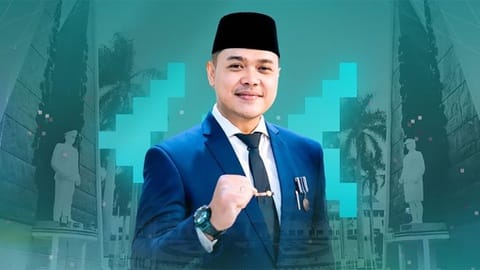
For Hendrik Dwi Martono, head of the village, this change did not begin with policy, but with a feeling that took shape thousands of miles away in China.
A Moment That Refused to Fade
In 2023, as part of the third cohort of the Cunzhangban (village leadership program), Hendrik traveled across China from Beijing to Hangzhou and then on to Wuyuan and Shanghai. The itinerary exposed him not only to major cities, but also to rural development models that would later reshape his thinking.
When asked what stayed with him most from his visit to China, Hendrik did not hesitate. It was not a single building or program, but an atmosphere.
"The discipline," he said. "Everything was clean, orderly, and calm."
The impression was consistent. Despite the scale and pace of development, the quiet absence of chaos struck him deeply. Electric vehicles glided past without noise. Public spaces felt organized, almost deliberate in their calm.
"In Indonesia, you still hear motorbikes everywhere," he said with a faint smile. "But in China, it was peaceful—even in busy places."
Yet what lingered was not comfort, but urgency.
"I wanted to go home immediately," he admitted. "Not because I didn't enjoy it, but because I felt I had to start building."
A Shift in Perspective
The turning point arrived during visits to village-level institutions. What he saw challenged his assumptions about what a village office could be.
"In our system, a village office is usually just for administration, meetings, and information," he explained. "But there, it had more functions."
In China, the village offices were not merely functional but symbolic and educational. They served as centers for governance, but also as spaces for storytelling, cultural displays, and even economic promotion. Some included galleries, historical exhibits, and locally branded products. Others had mascots—distinct visual identities that fostered pride among residents.
"That sense of ownership was very strong," Hendrik said. "People were proud of their village."
It was not a model to be copied wholesale. Budget constraints, social structures, and governance systems differed. But the underlying principle of turning a public space into a source of pride resonated.
"I realized we didn't need to copy everything," he said. "We needed to adapt the spirit."
Starting Small, Thinking Big
Upon returning to Purwosono, Hendrik faced a familiar challenge: translating inspiration into action with limited means.
"The feeling was overwhelming," he said. "But everything has to be adjusted to our capacity."
He began with what he considered the most strategic point: the village office itself. He commenced with gradual changes by renovating, reorganizing, and redefining its purpose.
The goal was simple: to make people feel something when they entered.
"If people feel proud, they will care," he explained. "If they care, they will participate."
This emphasis on emotional connection—on fostering a sense of belonging—became central to his approach. Development, in his view, was not only about infrastructure, but about mindset.
"Trust comes first," he said. "Then ownership. After that, people will contribute, even without money."
Adapting Ideas to Local Realities
Not every lesson from China could be applied directly. Mechanized agriculture, for instance, posed a dilemma.
"In China, they use large machines," Hendrik noted. "But here, we must also think about employment. Many people rely on manual work to make a living."
Similarly, land ownership structures differ. While development projects in China often operate within state-owned frameworks, in Indonesia, much of the land belongs to individuals.
"That makes the situation more complex," he said. "We needed a different approach with more dialogue and persuasion."
Instead of focusing on scale, he prioritized feasibility. One of the most noticeable transformations began with something deceptively simple: a neglected river.
"It was dirty and underused," he recalled. "We cleaned it, organized the space, and turned it into a green public area."
The space was not initially intended as a tourist attraction. Yet its accessibility and aesthetic appeal drew visitors organically. What had once been overlooked became a shared asset.
"It showed people what was possible," Hendrik said.
The Challenge of Changing Mindsets
If physical transformation requires resources, cultural transformation requires patience.
"The biggest challenge is mindset," he admitted.
Residents were not resistant, but cautious. Many waited to see results before committing. Hendrik understood this hesitation.
"In villages, people don't always respond to ideas alone," he explained. "They need to see proof."
So, he led by example. Early projects, particularly the renovation of the village office, served as visible demonstrations of intent. Once residents saw the changes, participation increased.
"There was no strong rejection," he said. "Only questions: 'Can this really work?'"
For Hendrik, the answer was persistence.
"If the dream is important, you don't change the dream," he said. "You change the strategy."
A Philosophy Rooted in Conviction
This principle of staying simple yet firm guides his leadership.
"If something is meaningful, it must be realized," he said. "Even if the path is different."
This philosophy was shaped not only by his experience abroad but by his journey at home. When he first assumed leadership in 2017, Purwosono was classified as a 'disadvantaged' village. Within a few years, he bypassed the standard 'developing' phase to achieve the coveted 'independent' status—a leap rarely seen in the national index.
The transformation, he insisted, was not his alone. It was the result of collective effort achieved by aligning community aspirations with practical action.
Visible Changes, Quiet Shifts
Today, the changes in Purwosono are both visible and subtle.
Public spaces have improved. Community activities have increased. Even behavioral patterns have shifted.
"People used to leave quickly," Hendrik observed. "Now they stay longer."
Economic indicators, while not formally quantified in all cases, suggest progress. Fewer households rely on government assistance. More residents are finding opportunities locally.
"It's not just about income," he said. "It's about feeling comfortable, feeling hopeful."
Recognition followed in the form of awards, competitions, and external interest, but Hendrik remains measured.
"We didn't do it for awards," he said. "We did it because it needed to be done."
Looking Ahead
Despite the progress, Hendrik sees far more work on the horizon.
"This is still a process," he said. "There is always more to improve."
His vision extends beyond Purwosono. He speaks of villages as the foundation of national development, a perspective echoed in Indonesia's broader policy discourse.
"If villages move forward together, the country will move forward," he said.
It is an ambitious idea grounded in lived experience.
Back in his office, now a space that blends administration, culture, and community, Hendrik occasionally revisits photos and videos from his time in China—not out of nostalgia, but as a reminder.
"To keep the spirit alive," he explained.
For him, the journey did not end when he returned home. It began there.
Sumber: www.prnasia.com

Penulis: PR Newswire
Editor: PR Newswire