Masuk tirto.id
tirto.id - There is not much Hafiz, 11, can do when extreme heat hits his neighborhood. Every afternoon, the boy who lives in Cilincing, North Jakarta, spends most of his time indoors. Playing with his younger sibling has become one of the few ways he can keep himself entertained.
It is not because he does not want to play outside. Rather, the heat in the coastal area can be unbearable during the day. Hafiz has also fallen ill several times from heat exhaustion. As a result, he can only play outside in the late afternoon, when the sun begins to lose its intensity.
Still in elementary school, Hafiz finds it difficult to stay indoors for too long. He enjoys interacting with his peers and doing things he likes, including photography.
“When I’m at home and there’s nothing to do, I just get lazy. I get bored,” he said when he spoke to Tirto on Saturday, July 25, 2026.
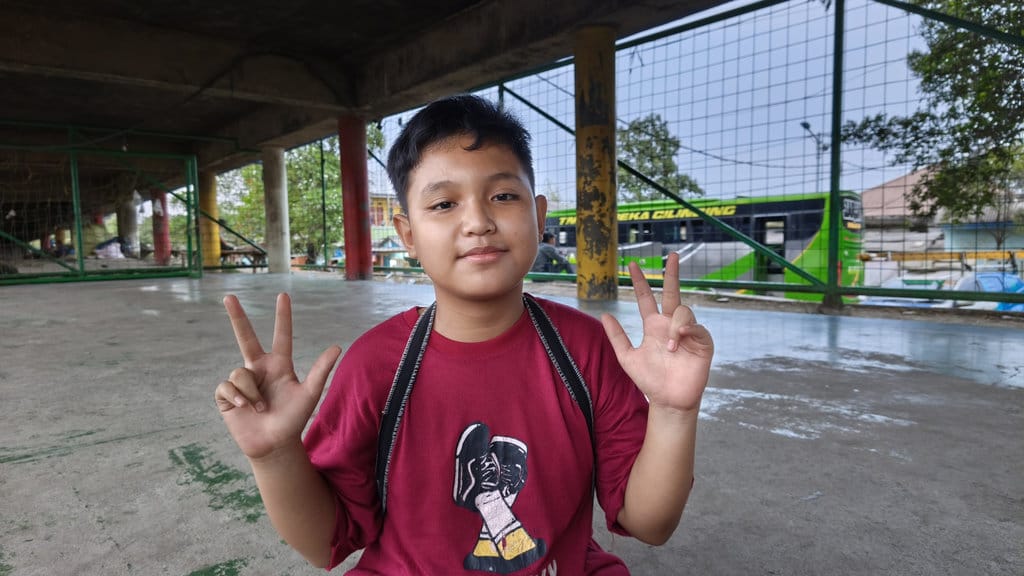
That was what motivated Hafiz to join the Young Journalists’ Class (Kelas Jurnalis Cilik), a program that teaches children in Cilincing the basics of journalism. The program runs for five months and combines classroom lessons with hands-on activities in the children’s neighborhood.
After learning about the program from a friend, Hafiz decided to join because he was interested in learning something new while pursuing his interest in photography.
His decision to join the Young Journalists’ Class was not solely driven by personal interests. Hafiz also wanted to speak out about the problems in the environment where he lives.
Through journalism, he hopes people in Cilincing will become more aware of the environmental and social problems they face in their daily lives, from climate change and extreme heat to poor waste management.
“So that people realize they shouldn’t throw trash away carelessly anymore, [because] some people throw [trash] into the sea. A lot of people throw their trash into the sea,” he said.
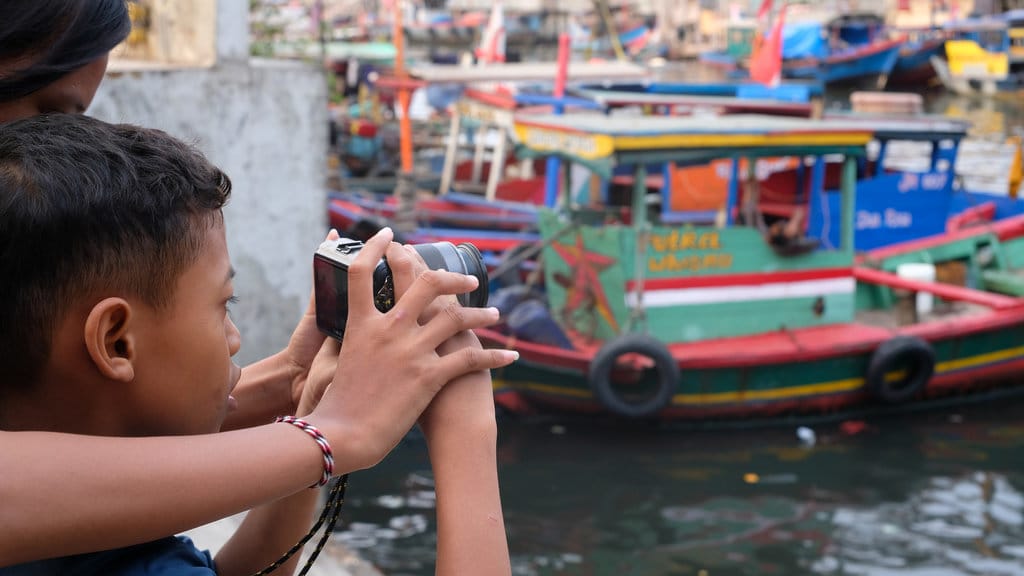
One day, Hafiz dreams of becoming a photojournalist whose work can make an impact. Through his visual work, he hopes to encourage local authorities to make changes through policies that put the interests of coastal communities at the forefront.
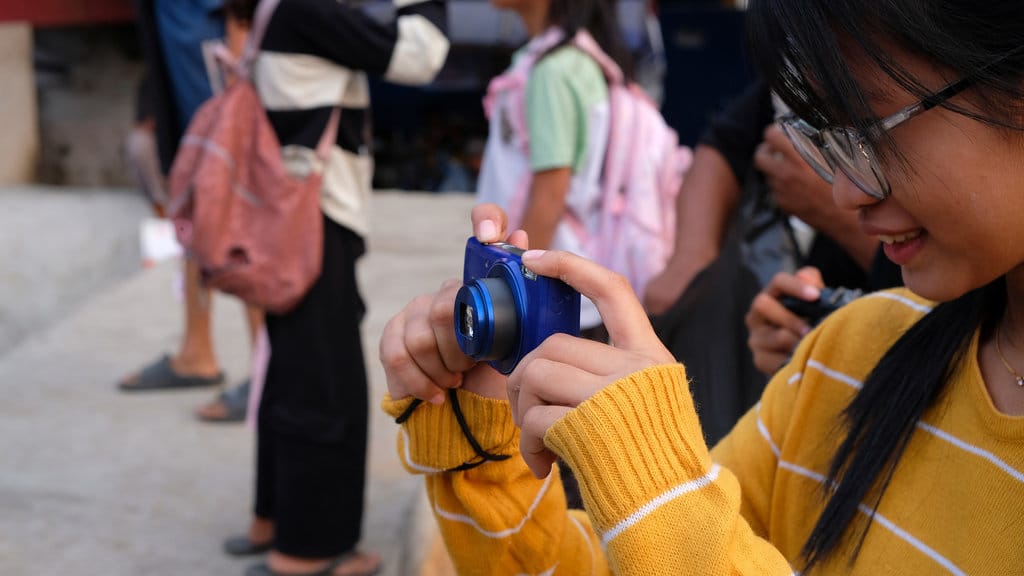
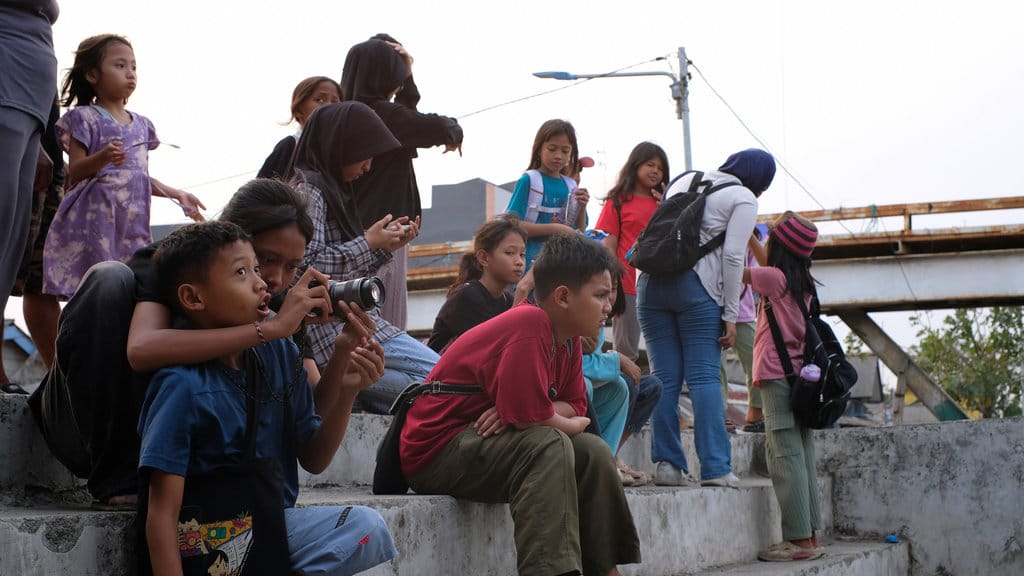
When Tirto observed the Young Journalists’ Class in Cilincing on July 25, 2026, Hafiz and dozens of other children enthusiastically handled cameras provided by the organizers.
Through their camera lenses, they documented the conditions of a neighborhood far from ideal. Their photographs captured the coastal settlement, household waste along the shoreline, and industrial activities that form part of everyday life in Cilincing.
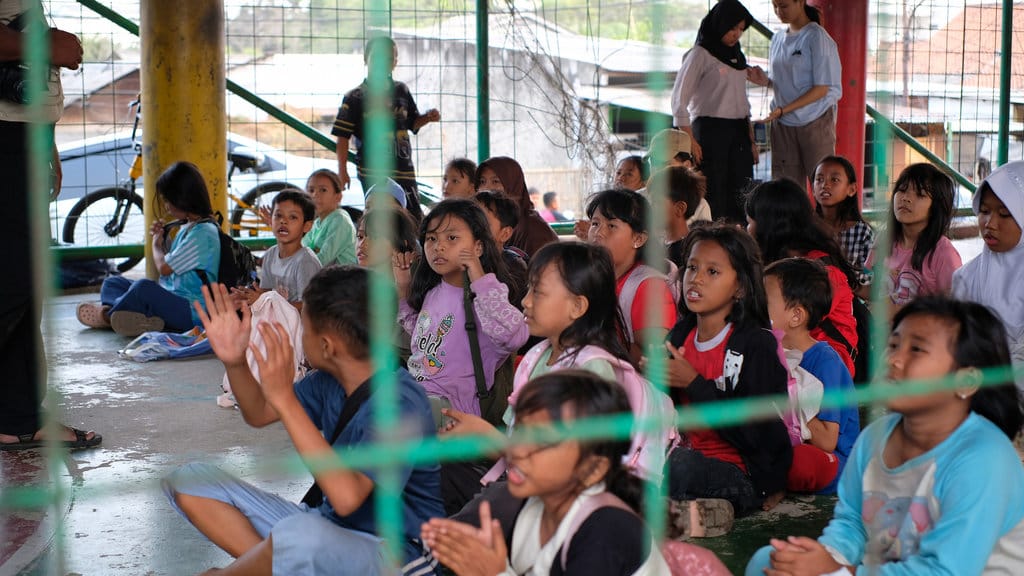
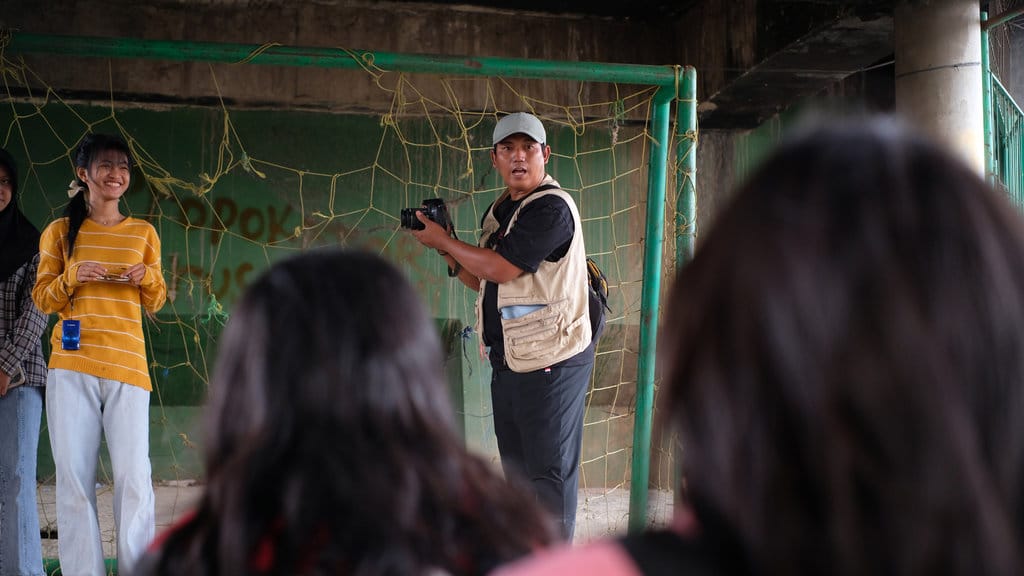
The spaces available for children in Cilincing to play and learn are also severely limited. This was evident from the Young Journalists’ Class itself, which had to use the space beneath a bridge as an improvised “classroom.” At times, instructors had to compete with the roar of large trucks passing directly overhead.
The limited space is an even greater challenge when the weather is hot. Open spaces become increasingly difficult to use, particularly during the day.
According to data on public green open spaces (RTH) managed by the Jakarta Parks and Urban Forestry Agency in 2024, North Jakarta had only 353 RTH sites.
Of the 2,545 RTH sites spread across Jakarta’s five administrative cities, North Jakarta had the fewest. South Jakarta had 866 RTH sites, followed by West Jakarta with 493, East Jakarta with 461, and Central Jakarta with 372.
Extreme Heat Restricts Children’s Outdoor Activities
In addition to limited play spaces, children participating in the Young Journalists’ Class face another major challenge: extreme heat during the day. Some have even chosen not to continue attending the class because they could not tolerate being outdoors when temperatures were at their highest.
Hazia, 12, one of the participants in the Young Journalists’ Class, has experienced the same problem. The heat has made her go outside less often, while air pollution around her home makes spending time outdoors even more uncomfortable.
“The heat also makes trees dry up,” Hazia told Tirto.
The extreme heat faced by the children has also raised concerns among their parents. Teguh, one of the parents of a Young Journalists’ Class participant, said the weather now feels increasingly hot, especially compared with decades ago when he was a child.
According to Teguh, even air conditioning is no longer enough to counter the heat around his home.
Despite this, he continues to encourage his child to participate in outdoor activities, including the Young Journalists’ Class, hoping the experience will help the child become more aware of and concerned about the surrounding environment.
“Because from the beginning, what we saw in [the Young Journalists’ Class] was that it was [about] voicing [environmental issues], issues around us, definitely,” he said.
When Tirto visited Cilincing on July 25, 2026, the highest temperature in the area reached 32.1 degrees Celsius, according to data from the Tanjung Priok Monitoring Station compiled by Meteostat.
That figure provides a snapshot of the weather conditions when the Young Journalists’ Class was taking place. But the heat in North Jakarta is not limited to a single day.
Weather observations show that thermal conditions along the North Jakarta coast have undergone long-term changes.
An analysis by the Meteorology, Climatology, and Geophysics Agency (BMKG) shows that the annual minimum temperature recorded at the Tanjung Priok Maritime Meteorological Station between 1981 and 2025 has been on an upward trend.
The increase in minimum temperatures has occurred at a faster rate than the increase in maximum temperatures. Minimum temperatures have risen by approximately 0.026 degrees Celsius per year, while maximum temperatures have increased by around 0.014 degrees Celsius per year.
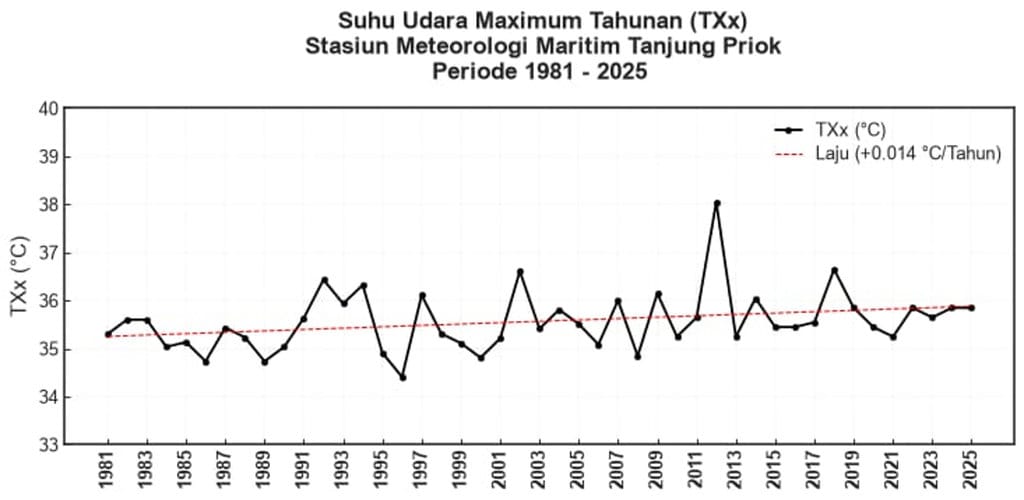
Ardhasena Sopaheluwakan, BMKG’s Deputy for Climatology, explained that the more pronounced increase in minimum temperatures indicates significant nighttime warming.
The phenomenon is generally amplified by urbanization, or the Urban Heat Island (UHI) effect, as well as global climate change in the coastal areas of North Jakarta.
“Gegraphically and meteorologically, North Jakarta is a coastal area with higher humidity due to its proximity to the sea. The lower elevation of North Jakarta compared with other areas also allows heat and pollution to accumulate,” Ardhasena told Tirto on Wednesday, August 5, 2026.
Play Spaces May Be Limited, But Children’s Dreams Are Not
The less-than-ideal environment in Cilincing has done little to dampen the enthusiasm of the dozens of children taking part in the Young Journalists’ Class. Some of them also harbor big dreams of creating change.
Kharisa is one of them. The 15-year-old was part of the program’s second cohort, joining the Young Journalists’ Class in 2021. At the time, she was in the second grade of elementary school.
Five years after taking part in the class, Kharisa is now more determined to pursue a career in journalism. Her goal is to report on environmental problems and crime in the neighborhood where she lives.
Kharisa believes journalism has the power to bring the problems faced by local communities to the attention of policymakers. Even today, she says, many public facilities and infrastructure in her neighborhood remain inadequate.
“What I hope is that, [through journalism], I will give information about what exists in my environment, so that it becomes known, you know. I hope the government can hear it. Especially because in my neighborhood there are many roads with potholes. I feel sorry for the people [here],” Kharisa told Tirto.
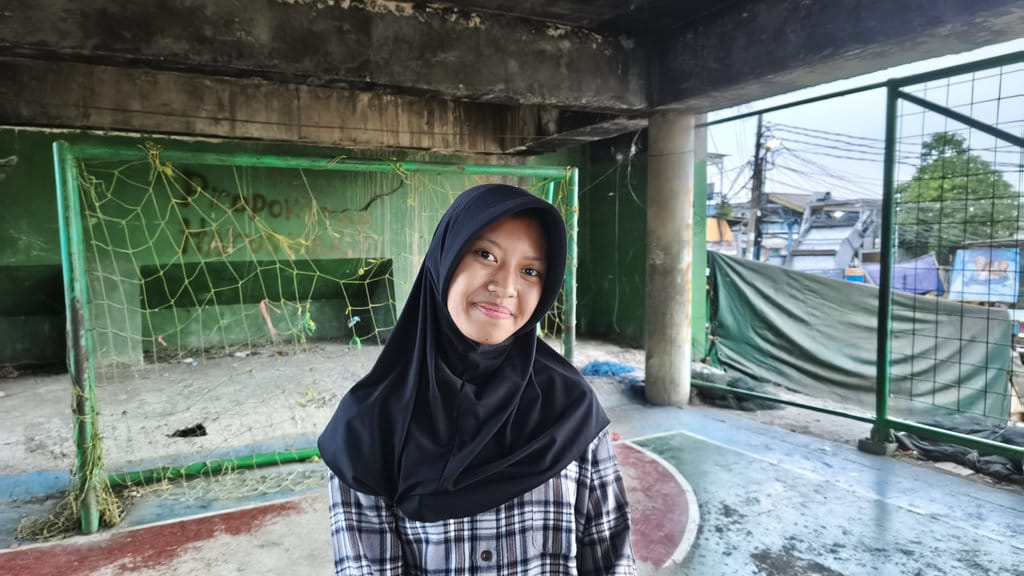
She is also deeply concerned about climate change in her neighborhood. One of the changes she feels most strongly is the increasing heat.
Kharisa has observed changes in the behavior of children around her, who now spend less time playing outdoors because of the heat. Yet around 10 years ago, she and other children her age would regularly go outside to play.
“Kids nowadays are [reluctant] to go outside. They don't really go out anymore. They just play online games and things like that,” she said.
That is why Kharisa hopes that by reporting these issues to a wider audience, more people and government officials will recognize the changes taking place in their communities and take action.
Why Ilyas Founded the Young Journalists’ Class
Born in Cilincing 42 years ago, Syamsudin Ilyas witnessed firsthand the hardships of life along Jakarta’s coast. At the time, many children and teenagers around him engaged in various forms of delinquency, with some being forced to grow up before their time.
Poverty has also remained a persistent problem for residents of North Jakarta, including Cilincing. As recently as 2024, North Jakarta still had the highest percentage of people living in poverty among Jakarta’s five administrative cities.
As he grew older, Ilyas chose journalism as his profession. For him, journalism was the best way to bring attention to the problems facing his birthplace.
He also dreamed of seeing more people in Cilincing gain journalistic skills and tell their everyday stories to a wider audience. That ambition eventually led Ilyas to establish the Young Journalists’ Class in 2018.
“I myself am a local resident, I was born and raised in Cilincing, and thankfully I was given a little knowledge about journalism, particularly photojournalism. In the end, we shared that knowledge, especially with children from the coastal community,” Ilyas told Tirto.
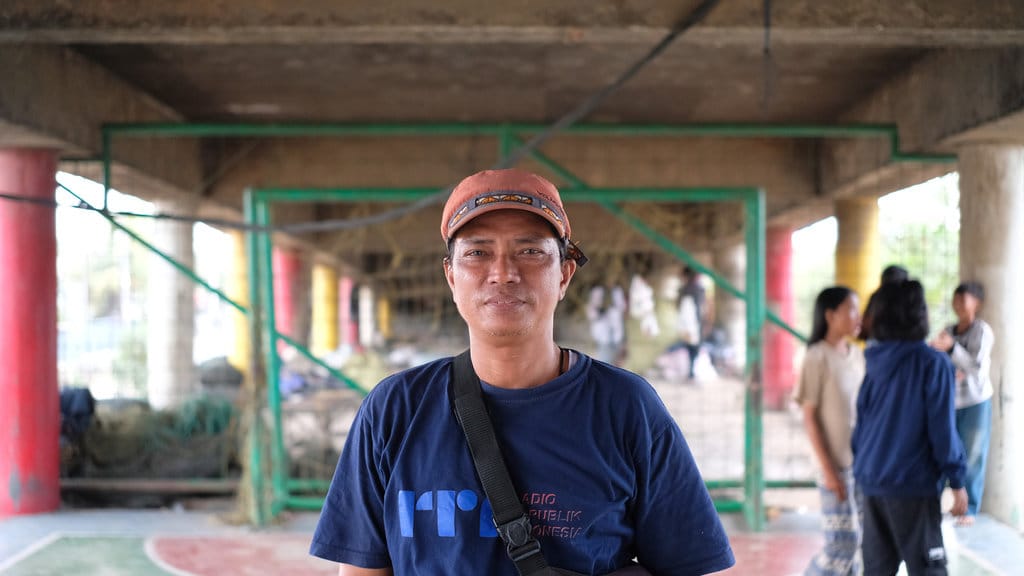
Ilyas explained that during the five-month program, children participating in the Young Journalists’ Class learn news-writing techniques, the basics of field reporting, and introductory photography.
The learning methods used in the Young Journalists’ Class also vary, ranging from classroom lessons to hands-on field practice, followed by a photo exhibition organized by the children themselves.
Over the eight years that the Young Journalists’ Class has been running, Ilyas said he has seen many changes among children in Cilincing. For example, some children who participated in the program have improved their communication skills and found it easier to secure work.
“Thankfully, some of the children have been able to pay for their education through photography. Some have become freelance photographers in Kota Tua,” he said.
The Young Journalists’ Class as a Gateway to Climate Change Awareness
Living in a coastal area, Ilyas said children in Cilincing bear the brunt of many environmental problems, including extreme heat. That is also why the Young Journalists’ Class begins in the late afternoon, when the sun is less intense.
Although some children are still unfamiliar with climate change and the connection between rising temperatures and environmental changes, Ilyas continues to encourage participants in the Young Journalists’ Class to become more aware of the problems around them.
“Because we work in journalism, environmental issues, issues of global warming, we also raise those issues in our activities,” Ilyas said.
The approach does not always involve explaining these issues in the classroom. Instead, the children are encouraged to observe the environment where they live and identify the problems they believe are important to document and tell through their work.
As a result, during the photo exhibition that concludes the Young Journalists’ Class, the children are beginning to translate their concerns about the impacts of climate change into visual narratives.
Ilyas hopes that in the future, children in Cilincing will become increasingly skilled at telling the stories of the environmental and social problems around them, particularly through journalism.
“Hopefully, those who become [journalists] can also speak out about environmental issues, like what we are doing here along the coast of North Jakarta,” he concluded.
Government and Communities Must Work Together to Protect Children From Extreme Heat
What Ilyas is doing through the Young Journalists’ Class is, in essence, a form of climate change literacy education for children in Cilincing. The children are not only taught the basics of journalism. They are also encouraged to develop an awareness of how climate change affects their everyday lives.
This is in line with a 2023 UNICEF report, which emphasizes the importance of governments, communities, and other stakeholders working together to protect children from the impacts of extreme heat.
Both governments and communities should make use of available resources to encourage two-way dialogue, provide context-specific social and cultural support, and implement local actions and solutions.
A whole-of-society approach—involving multiple stakeholders and sectors—is also important to expand protection for children and other vulnerable groups facing heat stress.
UNICEF therefore emphasizes the importance of involving various stakeholders, including ministries of health and education and other relevant government ministries, private-sector partners, civil society organizations, young people, and the media.
In its 2026 report, UNICEF also stated that countries have an obligation to protect children from harmful environmental impacts. Governments must therefore develop laws, regulations, policies, standards, guidelines, plans, strategies, and budgets aimed at protecting children from the impacts of climate change.
Countries must also invest in climate-related education, knowledge, and skills while strengthening the capacity of decision-makers and experts. These measures are intended to ensure children’s rights to be heard and involved in decision-making processes that affect their lives.
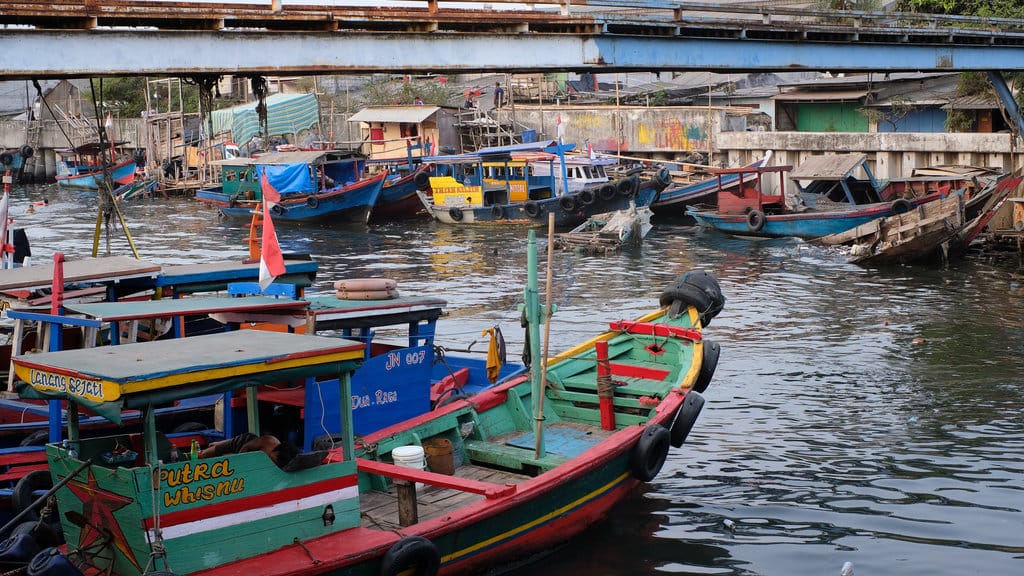
Fajar Sani, a Project Officer at Laporiklim, said that without government involvement, communities tend to resort to emergency self-adaptation when dealing with the impacts of extreme heat.
Fajar explained that the government must take climate literacy seriously by investing in public awareness of how to recognize the symptoms of extreme heat. This could lp prevent more serious health consequences caused by extreme heat.
“As long as the government continues to treat extreme heat as ordinary weather, rather than as a public health threat, public literacy will remain the first and only line of defense,” Fajar told Tirto on Wednesday, August 5, 2026.
Laporiklim currently onsiders public participation—particularly the involvement of children—in developing extreme heat adaptation measures to be severely lacking.
Fajar said children have almost no meaningful space to speak in urban climate adaptation planning, even though they are among those facing the greatest health risks over the longest period.
“Heat health literacy in schools and community health centers is also important, [such as] teaching parents and children to recognize the symptoms of heat stress early,” he concluded.
This report was produced as part of the Media Fellowship under the Cities on Fire initiative in Bangkok, Colombo, Jakarta, and Manila and 'Cooler Cities. Healthier Children. Brighter Futures.' Initiative in India.
Editor: Alfitra Akbar